Sunday, August 16, 2009

How to fix "Missing or corrupt NTFS.sys" error in Windows XP

One of my XP SP2 computers at home crapped out today with the error “Missing or corrupt Ntfs.sys” and would not get past the initial BIOS screen. I eventually got it back up and running without having to format the computer, but it took a little while and it wasn’t super straightforward. So if you are getting this error, here are the steps you can take to fix it.

The exact error message that you get from Windows is:

Windows could not start because the following file is missing or corrupt: System32\Drivers\Ntfs.sys


When you do a search in Google for ntfs.sys is missing or corrupt, the first result is from Microsoft Support. In particular, it states you might get this message when you convert your hard disk from FAT to NTFS. That was not the case in my situation. I tried to run defragmenter and it froze in the middle. After restarting, I got this message.

I’ll explain their method first (which did not work for me) and then two other methods to fix this issue.

Use the Recovery Console to replace Ntfs.sys

Pop in your CD into the computer and boot off the CD when prompted to “Press any key to boot from CD“. When the Welcome screen appears, press R to select the To repair a Windows XP installation using Recovery Console, press R option.
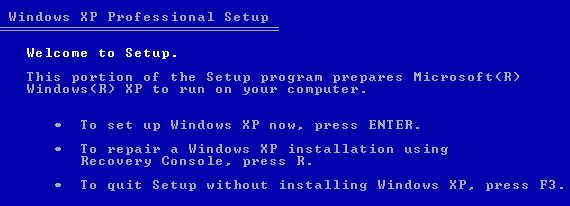
repair installation

Next, type the number for the installation you want to logon to from the Recovery Console. You’ll also need to know the administrator password in order to get to the command prompt.
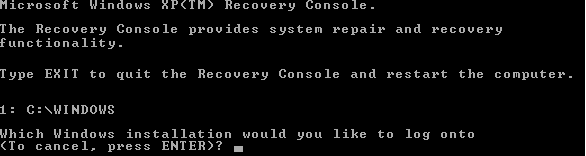
recovery consol

Now that you are at the command prompt, you need to enter in the following DOS commands, pressing Enter after each one:

cd \windows\system32\drivers
ren ntfs.sys ntfs.old

This basically renames the current ntfs.sys file to something else so that we can replace it with a new one that hopefully is not corrupted. Now type in the following command:

copy cd:\i386\ntfs.sys drive:\windows\system32\drivers

Where cd is the drive letter for the CD-ROM drive that has you Windows XP CD, and drive is the drive where you installed Windows XP (most likely C:).

That’s it! Now go ahead and remove the CD and type quit. Go ahead restart your computer and see if you are able to log back into Windows!

Fix Ntfs.sys error by using CHKDSK

For some reason the above-mentioned method did not work for me! I think it was because the file itself was not an issue, but that there were some problems with the hard drive itself. So after trying to copy the new Ntfs.sys file from the CD and that not working, I thought I would try to run CHKDSK.

You can run CHKDSK from the Recovery Console itself. So you would follow the same instructions as mentioned above, but instead of typing in the three DOS commands above, you would type in the following at the command prompt:

CHKDSK /R

The /R is a command line switch that says to repair any errors that are found on the hard disk automatically. CHKDSK can take quite some time to run, so be ready to wait. It took about 30 minutes on my computer.

Luckily for me, there were several errors on the disk and CHKDSK fixed them all. I restarted the computer and Windows loaded fine, no missing ntfs.sys error!
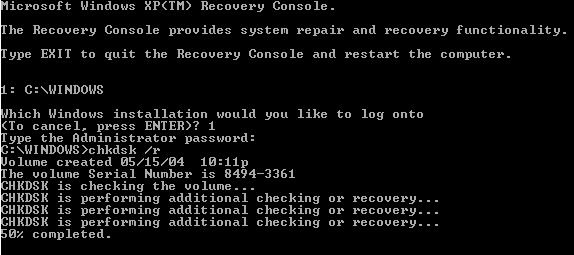
chkdsk

Repair Ntfs.sys by doing a repair install of Windows XP

If none of the above-mentioned methods worked, you can try to do a repair install of Windows XP, which basically replaces all of the Windows system files. Your applications and settings will remain intact, but you will have to reapply all Windows updates.

Doing a repair install is pretty easy, the starting steps are the same as for getting into the Recovery Console, but instead of pressing R to repair, you press Enter to setup Windows.
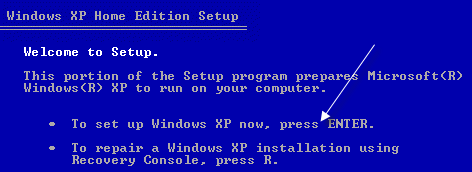
setup windows

Then you simply select the installation you want to repair and press R to start the repair.
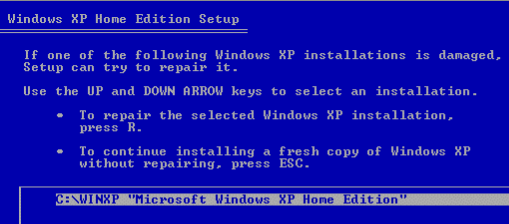
repair install

Note that it may look like Windows is actually re-installing a fresh copy of itself, but this is not the case! You’ll see the install screens like if you were to do a fresh install, but don’t worry, you’ll still have all of your applications, settings, and data.

Hopefully you now have a working computer! If you are getting stuck somewhere, etc, post a comment and I’ll try to help you out! Good luck!

[tags]ntfs.sys, fix ntfs.sys error, missing ntfs.sys, missing or corrupt ntfs.sys, corrupt ntfs.sys[/tags]

Tuesday, May 5, 2009

Easy Money on Click to Pay Sites!

We do not have lots of things to do this summer, so why not make money? All you have to do is to click ads and view the page for about 5-30 seconds and then you'll be paid. Minimum cashout depends on the site, some offers a very low cashout of 1-2$, while some ranges from 7-10$.

First step is to create an account at paypal.com or alertPay.com its free. Your payment will be sent through your paypal or AlertPay account.

Then, create an account for free at any of these sites, you can also create account at all of these sites for you to earn more money. More pay per click site accounts = more money. But, you must have only one account per site.

Click here to create your AlertPay.com account


Earn money with AlertPay

Last is to click ads, or read emails, or play game, or sign up to any site to earn money. it's easy, and it's real! Create your own account now and start earny dollars!


WordLinx - Get Paid To Click


Monday, March 9, 2009

Understanding Web Hosting

If you want to own a website, then you have to definitely think about web hosting too. A website contains a collection of web pages and can be referred as computer files which usually contains text files and pictures. These files will have to be stored in a super computer along with high speed internet connection. These computers are known as servers. All your files will be put on the servers. It is the web hosting providers who provide such services. It is the web hosting company who are responsible to host your website. The servers which contain the files are located in a particular place called data center. A data center is in the form of a room or a building. It is here were fast internet connection to servers is provided. It also provides security entrance, fire protection, electricity backup etc. One must understand that a server is quite different from a personal computer. A personal computer may have 1 processor, 1 hard disk drive and 1 power supply but a powerful server will usually have 2 or more processor. This facilitates the server to work faster and process more applications at the same time. Hence, websites are always hosted on servers and not on personal computers.

You don’t have to invest huge money on endure technical issues in order to build and maintain your web hosting infrastructure. In a traditional hosting account, you would be allowed to host only 1 domain per hosting account. This would be considered as a waste of your money because most of the time you will not be using more than 10% of your given disk space and bandwidth. This will happen because hosting accounts today usually come with very large disk space and bandwidth. It will be unfair to still pay more for more domains when you have plenty of disk space left. So, I must say that the future of web hosting can be related to multiple domain hosting. By using multiple domains hosting, you are actually making full use of your disk space and bandwidth.

In today’s times, the most common level of web hosting is shared hosting or so called “virtual hosting”. Based on the speed of the server, it can easily host more than 1000 websites without any problem. In this case, the users who are using the same server will share the same resources of it. Example: disk space, bandwidth, memory etc. This technique makes the hosting affordable because you end up paying only a portion of the server fee instead of the entire server. It is estimated that over 95% of websites of the internet are usually hosted on shared hosting environment. There is also another concept of so called “dedicated server” where you can choose to rent the entire server for your own use. Also, there are times when you can share a server with another user and this means that you are using a semi dedicated server. In the case of a managed hosting which is also called as dedicated hosting, you will rent the server from the web host. You are not the owner of the server. If you choose to buy a server instead of renting it then you will have to place it in a data center. It all depends upon your web hosting requirement.
Source: WebHosting Geeks

Tuesday, March 3, 2009

Panagbenga Festival : The Baguio Flower Festival


The Panagbenga Festival is held yearly during the month of February. The celebrations are held for over a month and peak periods are the weekends. The Panagbenga Festival showcases the many floral floats and native dances. The fragrant smells that could be presently teasing olfactory senses are probably less from the now-dried flowers from Valentine's Day than air floating all the way from Baguio City. At this time of year, the City of Pines is almost surely in flower fury over Panagbenga festival, the city's biggest festival.

Panagbenga is a kankanaey term for "a season of blooming." It is also known as the Baguio Flower Festival, a homage to the beautiful flowers the city is famous for as well as a celebration of Baguio's re-establishment. Since February 1995, it has been held to help Baguio forget the 1990 earthquake that distressed much of the city.

Panagbenga festival will have spectators enjoying a multiple floral and float parades over two days. The Baguio Flower Festival Association (BFFA) will have a street dancing parade and band exhibition. The Baguio Flower Festival Foundation (BFFF), meanwhile, will hold a parade. So where should spectators be stationed to not miss any of the float and floral parades? Session Road and Burnham Park. A search for the Mr. and Ms. Baguio Flower Festival, FM Panagbenga Pop Fiesta, Skateboard competition and Dolls of Japan exhibit were added to the BFFA calendar. The festival is supported by constituents of La Trinidad, La Union, Pangasinan, Marinduque and Masbate.

Often a Cañao is an undertaken to kick-off & celebrate the occasion. A Cañao is a dance that also is regularly performed at special occasions such as fiestas. In this two-person dance, the men hang blankets usually woven with an indigenous pattern or design-over each shoulder. The woman wraps a single similar blanket around her. The man leads her and dances in a circle with a hop-skip tempo to the beat of sticks and gongs. The dance must continue until the viewers decide to honor the dancers twice with a shout of "Ooo wag, hoy! hoy!" Once this has happened, the dancers can stop. It is an honor to be invited to join the dance, and elders and other respected members of the community are expected to join in at every occasion.

This year, owing to the fact that it is Baguio's Centennial year, the festival drew a record number of people, coming from as far away as Surigao, Mindanao to Vallejo, California (the sister city of Baguio). News reports intially tagged the number of expected guests at 50,000 but it reached 300,000 or more, based on official police estimates. No small wonder that this year's Panagbenga theme is "Our Festival, Yours Too."

The parades were lovely, full of vibrant colored costumes and props that looked wonderful against the clear china blue sky. The streetdancers
were energetic, clad in glittery costumes or body paint, carrying giant paper leaves and sunflowers. Some were dressed in bahags, the native attire, and danced to a chorus of gongs. Even some policemen, who dutifully marshalled the crowd, were wearing bahags along with their police uniform.

Right after the street and float parades, Session road shall be cleared for the “Session Road in Bloom,” from March 2-March 8 where floral-themed accessories are sold and flower-inspired activities done within the area. Promenaders and café-goers shall also be allowed in the area.

On March 7, Baguio Pony Boys and fun riders shall have their day of exhibition rides, games and activities on horseback. Known as “Gymkhana,” the event is reminiscent of oldenBaguio days when horse afficionados would come together and prove their mettle on horse games. Horses then were the primary mode of transportation to and from the agricultural and mining areas.

Closing ceremonies shall be on March 8, de Leon said.

The extra week Innovations to the activities abound, de Leon added, including string quartet and ballet performances during the fluvial parade, usually done at the Burnham Park Lake. Additional activities are being awaited.

Activities are bigger due to the flower festival’s joint celebration with the centenary, de Leon clarified.

As to sponsored events, de Leon said that there shall be no sponsor dominance, nor commercialization for the festival.

Congressman Domogan also emphasized that the flower festival is meant to be a thanksgiving event, for the promotion of unity and to sustain the tourism industry in the city.

The congressman downplayed expectations of a house bill approval, a move to regulate festivals in the country due to the presently-felt economic crisis.

Download the Baguio Flower Festival - Panagbenga 2009 Schedule of Events

Monday, March 2, 2009

The Tree Of Life


The Coconut Tree is known to have many uses, from its roots to tips
(leaves), from culinary to non- culinary. In the Philippines, the coconut
tree is considered as the "Tree of Life".

You must be wondering, why is that so? Allow me to cite the different parts
of the coconut tree and its corresponding benefits and/or uses. Let's start
with...

1.
Coconut Roots
Coconut roots are used as beverage, dye, mouthwash, and medicine for dysentery
(formerly known as flux or the bloody flux). A frayed-out piece of root can also
be used as a toothbrush.
2.
Coconut Trunks
Coconut trunks, its hardy and durable wood is used for building small bridges,
preferred for their straightness, strength and salt resistance. It is also used
to make benches, tables, carvings, picutre frames, tables, tool boxes and construction materials, among others. Paper pulp can also be extracted from the coconut trunk
and other woody parts of the tree.
3.
Coconut Branches
Coconut branches (leaf petioles) are strong and flexible enough to make a switch
(a flexible rod, typically used for corporal punishment).
4.
Coconut Leaves
5. Coconut leaves can be woven to create effective roofing materials, or reed mats.
It can also produce good quality paper pulp, midrib brooms, hats and mats, fruit
trays, waste baskets, fans, beautiful midrib decors, lamp shades, placemats, and
bags. The stiff leaflet midribs can also be used to make cooking skewers and
kindling arrows. Dried coconut leaves can be burned to ash, which can be harvested
for lime.
Coconut Fruit
Coconut fruit produces buko, often used for salads, halo-halo (crushed ice with
sweetened fruit), sweets and pastries. The "sport fruit" of the coconut known as
makapuno is primarily harvested in the Philippines. They are sold in jars as
"gelatinous mutant coconut" cut into balls or strands. Considered a delightful
delicacy and largely used for making preserves and ice-cream. It is possible for
it not to be kept in storage and still, will not germinate.
6.
Coconut Meat
Coconut meat is the thick white, fleshy substance found inside the coconut shell.
It is edible and can be used fresh or dried in cooking. It can also be used to
obtain coco flour, desiccated coconut, coconut milk, coconut chips, coconut candies,
bukayo or local sweetened shredded coconut meat, latik copra and even, animal feeds.
7.
Coconut Water
Coconut water provides an isotonic electrolyte balance, and is a highly nutritious
food source. Uses of coconut water include: coconut water vinegar; coconut wine;
production of the chewy, fiber-
rich "nata", good as a dessert and as a laxative; as a growth factor; and as a
substitute for dextrose. It is also used to cure renal disorders. "Bukolysis" is
the medical process of reducing or dissolving urinary stones from the urinary tract,
using buko water from 7 to 9 months old coconuts. If you heard of "water therapy",
there is also such thing as "buko/coconut therapy".
8.
Coconut Milk
Coconut milk is made by processing grated coconut with hot water or milk, which
extracts the oil and aromatic compounds. It should not be confused with the coconut
water mentioned above, and has a fat content of approximately 17%. When refrigerated
and left to set, coconut cream will rise to the top and separate out the milk. The
milk is used to produce virgin coconut oil. It is a common ingredient in many tropical
cuisines. In Thailand, coconut milk is the base of most Thai curries.
9.
Coconut Oil
Copra is the dried coconut meat and, after further processing, is a source of high
coconut oil content (as much as 64%). Coconut oil is the most readily digested, of
all the fats, generally used in the world. Its chief competitors are soya bean oil,
palm oil and palm kernel oil. It can be rapidly processed and extracted as a fully
organic product from fresh coconut flesh, and used in many ways including as a medicine
and in cosmetics, or as a direct replacement for diesel fuel. Virgin coconut oil is
found superior to the oil extracted from copra for cosmetic purposes.
10.
(Coconut) Apical Bud
Apical buds of adult plants are edible and are known as "palm-cabbage" or heart-of-palm.
In the Philippines, it is known as ubod and considered one of the finest vegetables.
It is considered a rare delicacy, as the act of harvesting the bud, could kill the palm.
It can be served in many appetizing ways. Cubed in fairly large bits, makes a wonderful
addition to Spanish rice, or in their long strips, to Arroz a la Cubana. It is also
eaten in salads (mixed with mayonnaise or thousand island dressing), known as
"Millionaire's Salad".
11.
Coconut Infloresence
Out of the bud of the coconut tree's infloresence is a fermented juice called coconut
toddy or, in the Philippines, tuba. The principal uses of the toddy are: as fresh
beverage; for producing alcoholic beverages; for producing vinegar; for making sugar;
and as a source of yeast for making bread.
12.
Coconut Husk
Coconut husks are made of bristle fiber (10%), mattress fiber (20%) and coir dust and
shorts or wastes (70%). Coir is used in ropes, mats, brushes, caulking boats and as
stuffing fibre; it is also used extensively in horticulture for making potting compost.
The husk can be used for fuel and are a good source of charcoal. Dried half coconut
shells with husks are used to buff wooden floors, making it clean and shiny
(free from dusts). In the Philippines, it is known as "bunot". Fresh inner coconut
husk can be rubbed on the lens of snorkelling goggles to prevent fogging during use.
13.
Coconut Shell
Coconut shell produces the core of the most saleable household products and fashion
accessories that can be turned into lucrative, wide-selling cottage industries. In the Philippines, dried half shells are used as musical instrument in a folk dance called "Maglalatik", a traditional dance about conflicts for coconut meat within the Spanish era.
They are also used in theatres, banged together to create the sound effect of a horses' hoofbeats. Half coconut shells may be deployed as an improvised bra, especially for
comedic effect or theatrical purposes. Shirt buttons can be carved out of dried coconut
shell. Coconut buttons are often used for Hawaiian Aloha shirts.

You see how amazing the coconut tree is? In fact, in the Philippines, it is considered
as one of the major dollar earner industry that provides livelihood to most of the
country's population. Indeed, a Tree of Life!

And did you know that in World War II, coastwatcher scout Biuki Gasa was the first of
two from the Solomon Islands to reach the shipwrecked, wounded, and exhausted crew of
Motor Torpedo Boat PT-109 commanded by then, the future U.S. President John F. Kennedy.
Gasa suggested, for lack of paper, delivering by dugout canoe, a message inscribed on
a husked coconut shell. This coconut shell was later kept on the President's desk, and
is now, in the John F. Kennedy Library.
You see how amazing the coconut tree is? In fact, in the Philippines, it is considered
as one of the major dollar earner industry that provides livelihood to most of the
country's population. Indeed, a Tree of Life!

And did you know that in World War II, coastwatcher scout Biuki Gasa was the first of
two from the Solomon Islands to reach the shipwrecked, wounded, and exhausted crew of
Motor Torpedo Boat PT-109 commanded by then, the future U.S. President John F. Kennedy.
Gasa suggested, for lack of paper, delivering by dugout canoe, a message inscribed on
a husked coconut shell. This coconut shell was later kept on the President's desk, and
is now, in the John F. Kennedy Library.